UXO Services / Intrusive surveys
Understand the risk.
Plan the next move.
Intrusive UXO survey planning and specialist CPT support for piling, boreholes and ground investigation.
Bring UXO engineering experience and specialist survey capability together around the needs of your site.
 Call us now
Request a fast quote
Photograph from Fugro’s Wismar project · Illustrative equipment image, not a UXOS project · Permission pending
Below the surface
A targeted approach to deeper UXO risk.
Where a site’s UXO assessment identifies a need for deeper investigation, an intrusive survey may help inform the next stage of construction.
UXOS is developing an intrusive survey offering that combines UXO engineering support with specialist CPT provision. Each enquiry is reviewed against the proposed works, site history, ground conditions and access before a survey scope is agreed.
Our intended role is to coordinate the UXO requirements and client interface, with specialist rig, instrumentation, interpretation and reporting responsibilities clearly defined for each commission.
Where it can help
Planned around your construction programme.
Piling & foundations
Investigating agreed pile positions or defined areas before deeper foundation works, where justified by the site’s UXO risk assessment.
Boreholes & ground investigation
Supporting the planning of intrusive investigation locations and coordinating UXO requirements with the ground investigation team.
Complex site conditions
Considering intrusive options where surface survey results are limited by ferrous clutter or infrastructure. Suitability and interference still require assessment.
Above and below ground
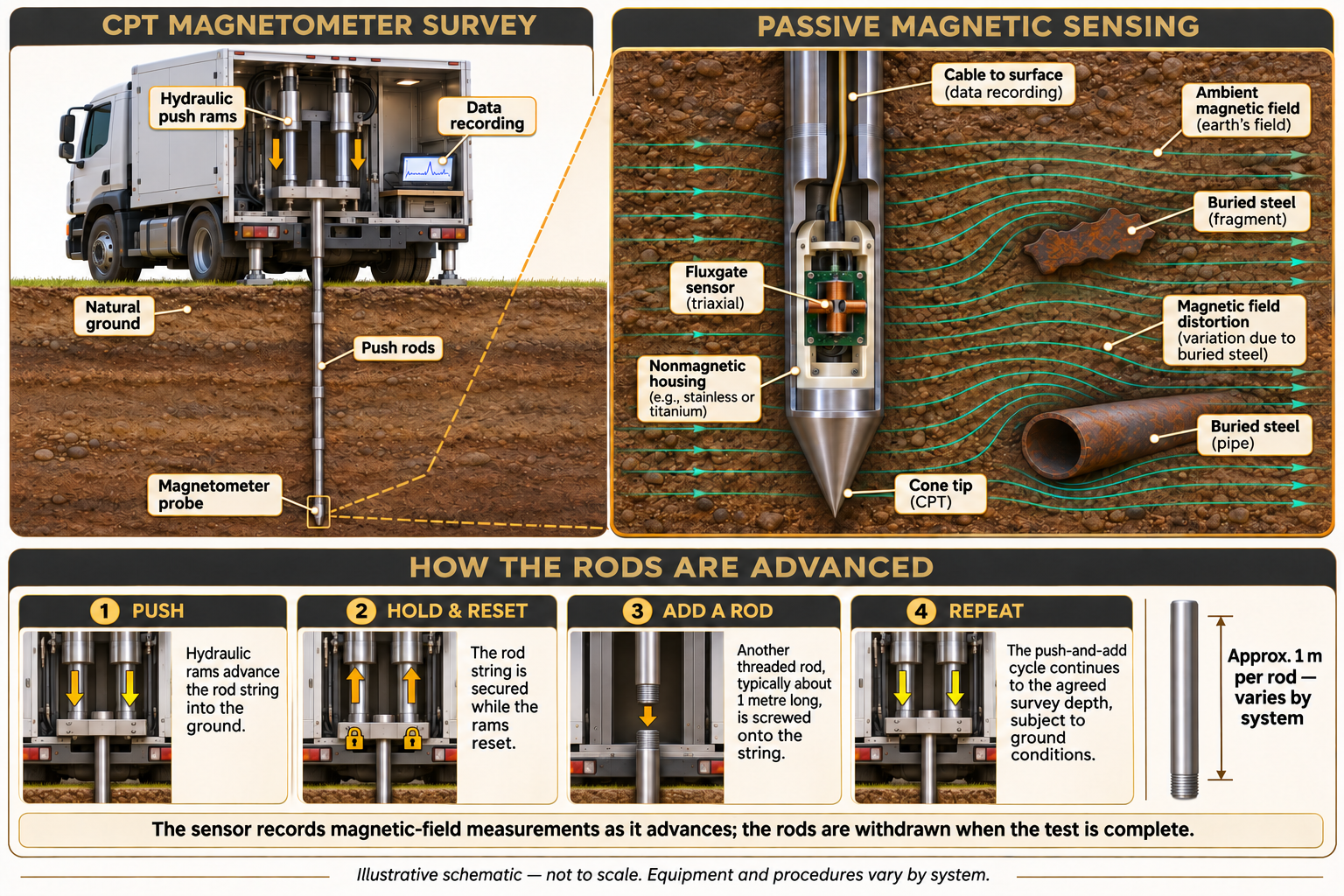
The whole process, in one view.
- The vehicle carries the hydraulic equipment.
- Joined steel rods transfer the pushing force down to the probe.
- The sensor takes measurements below ground and sends data back to the recording system at the surface.
The question we’re often asked
“How can that vehicle push a probe so deep?”
It adds the rods one section at a time.
The full rod string does not have to fit inside the vehicle at once.
Each section is typically around one metre long and joins to the next through a threaded connection.
The equipment repeats a short pushing and rod-handling cycle.
01
Push
The hydraulic rams advance the connected rods and probe into the ground.
02
Hold & reset
The rod string is secured while the pushing mechanism returns ready for the next cycle.
03
Add a rod
A further threaded section—typically about one metre long—is screwed onto the top of the string at the surface.
04
Repeat
The cycle continues towards the agreed survey depth, subject to ground conditions, equipment limits and the survey procedure.
The technology
Specialist equipment. Experienced oversight.
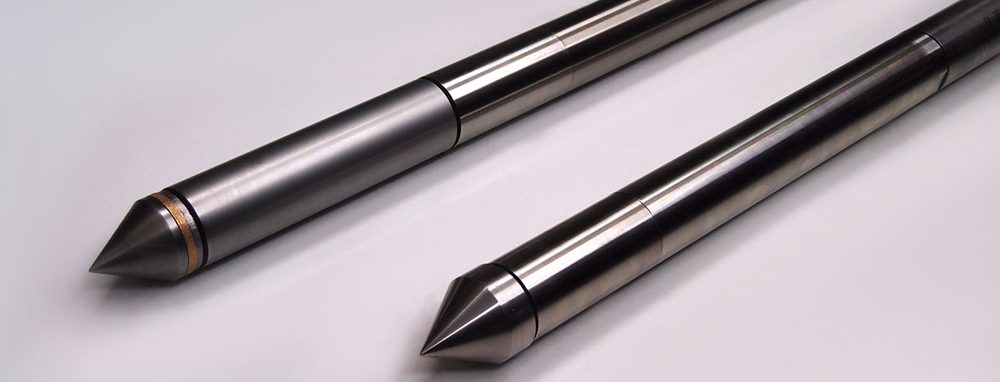
A magnetometer-equipped CPT probe records magnetic variations during penetration.
Those measurements need competent interpretation: a magnetic anomaly does not, by itself, identify an item as UXO.
Magnetometer cone head · Source: Lankelma · Permission pending
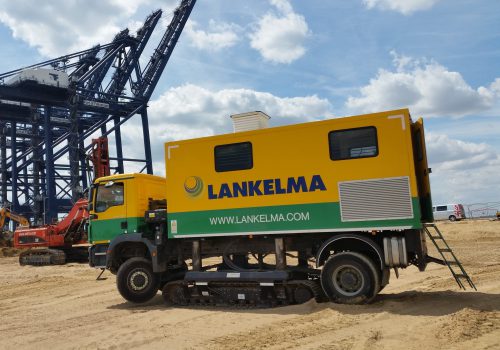
Lankelma fieldwork photograph · Source: Lankelma · Permission pending
Survey depth, coverage and detectability are specific to the target, instrumentation and site conditions.
A survey does not guarantee that all UXO is absent, and its conclusions apply only to the defined scope and recorded limitations.
A clear route forward
From enquiry to a defined survey record.
01
Review the site and proposed works
Assess available UXO reports, investigation layouts, target depths, services information and site constraints.
02
Agree the method and responsibilities
Define the survey objectives, equipment, coverage, decision criteria, emergency arrangements and responsibility for interpretation and sign-off.
03
Coordinate specialist fieldwork
Integrate the appointed CPT provider and UXO support into the site programme, with an agreed response to anomalies, refusal or incomplete coverage.
04
Record results and limitations
Provide the deliverables agreed for the commission, identifying investigated locations and depths, outstanding issues and recommendations for the next stage.
What the sensor measures
Reading changes in the magnetic field.
A passive sensor below ground
A fluxgate magnetometer measures the magnetic field around the probe. Ferrous objects can disturb that field, creating variations that appear in the recorded measurements.
The coloured lines in the illustration show this principle. They are not a beam transmitted by the probe, and they do not define a guaranteed search radius.
Measurements need interpretation
Buried pipes, scrap steel and other ferrous material can all produce anomalies. A magnetic response alone does not identify an object as UXO.
Competent specialists review the data alongside the site’s UXO assessment, geology and survey conditions to determine what the results mean for the proposed works.